





















In August 2023, HashiCorp dropped a quiet announcement that detonated across the DevOps world. Terraform, the infrastructure-as-code tool that tens of thousands of teams had come to depend on, was changing its license overnight. One day, it was governed by the Mozilla Public License, a genuinely open standard that had helped build a thriving nine-year-old community. Next, it was under the Business Source License, a source-available arrangement that restricted commercial use in ways deliberately designed to prevent competitors from reselling the product.
Within 72 hours, a coalition of vendors and developers had drafted the OpenTF Manifesto. Within weeks, more than 33,000 GitHub stars and pledges from nearly 140 companies had accumulated behind the effort to fork Terraform. By September 2023, the Linux Foundation accepted the fork, renamed OpenTofu, as an official project. One of the most significant community revolts in modern open-source history took place in under two months.
Open source has quietly become the foundation of the modern software economy. A landmark Harvard Business School study estimated the demand-side value of open-source software (OSS) at a staggering $8.8 trillion, concluding that without it, companies would need to spend roughly 3.5 times more to build the software they depend on. OSS now appears in an estimated 96% of all commercial codebases, which means almost every product you use is built on infrastructure that someone, somewhere, is giving away for free. And yet the people and companies producing that value are often the most financially precarious players in the entire industry. That contradiction is the heart of why balancing growth and sustainability has become the defining strategic challenge for any open-source business.
The most pressing question in enterprise software right now isn’t whether to use open source. Nearly every company already does. The question is: how do open-source businesses balance growth and sustainability without betraying the communities that made them worth anything in the first place? It is a question that the brands under Startise, from a WordPress plugin company serving millions of sites to a next-generation cloud hosting platform, navigate every single day.
This blog unpacks the mechanics, the case studies, the failures and the principles that separate thriving open-source businesses from ones that collapse under the weight of their own generosity.
TL;DR (Quick Summary)
| Topic | Key Takeaway | Example/ Source |
| Market size | OSS market projected to reach $190B by 2034 | Market Reports World, 2026 |
| Best revenue model | Open-core monetizes enterprise features without restricting core adoption | GitLab ($580M revenue, FY2024); WPDeveloper (6M+ WordPress sites) |
| Cloud/managed SaaS | Sell convenience, not the software | Grafana Labs ($400M+ ARR, 2026); xCloud (WordPress & app hosting) |
| License change risk | Forks can outlive the original project | Redis → Valkey; Terraform → OpenTofu |
| Community as a moat | 1% paying users can generate $250M ARR with 20M community users | Grafana Labs |
| Sustainability failure mode | Widely used library maintained by unpaid volunteers | Log4j / Log4Shell (2021) |
| Emerging trend | AI-native OSS creating new models | Hugging Face $4.5B valuation |
The Open-Source Paradox: Why “Free” Is Both the Strength And the Problem
There is a reason nearly every successful developer tool of the last two decades started as open-source software. The distribution advantages are almost unfair compared to proprietary alternatives.
When your code is public, developers find you, not the other way around. There is no cold outreach, no enterprise procurement cycle to navigate before someone even installs your product. The code is auditable, which means the skepticism that greets proprietary black-box software evaporates.
Community contributions expand the product faster than any funded engineering team could. And when enterprise buyers finally engage, many have already been running your software in production for months. The sales cycle collapses.
Open-source business growth, in other words, benefits from a compounding flywheel that proprietary software simply cannot replicate at the same speed.
But “free” also creates a trap and it swallows companies whole if they are not paying attention. Infrastructure and support costs scale with usage. A project with a million active users does not generate a million dollars of revenue; it might generate zero. Contributors expect features, responsiveness and roadmap transparency that commercial instincts push against. And the moment you try to monetize too aggressively, you risk fracturing the very community that built your distribution moat in the first place.
According to Tidelift’s State of the Open Source Maintainer report, roughly 60% of maintainers are still unpaid and around 60% have quit or considered quitting their projects. The lesson isn’t that open source is broken. It is that open-source business sustainability cannot be an afterthought and that the organizations consuming trillions of dollars of value from open-source code have an obligation that most of them have historically ignored.
Revenue Models That Actually Work (And the Ones That Don’t)
The most important thing to understand about open source business monetization is that “open source” is a software development model, not a business model. Treating it as the latter is the mistake that causes companies to reach for license changes, alienate communities and ultimately leave growth on the table.
Here are the revenue models that work and why.
Open-Core (Freemium): The Dominant Model Today
Open-core is an approach in which the core product remains fully open-source and free, while enterprise-grade features, such as single sign-on, role-based access controls, audit logs, compliance tooling and SLA guarantees, are gated behind a commercial license.
The strategic genius of open-core is that it preserves all the distribution advantages of open source while creating a natural upgrade path for organizations that need enterprise features. The developer evaluates the free version, gets their team addicted to it and eventually, their procurement team is paying for it without any outbound sales.
The critical design decision in an open-core model is where to draw the line between free and paid. Draw it too tight, locking away features that feel basic and you strangle adoption before anyone ever becomes a customer. Draw it too loosely, giving away so much that nothing is compelling in the paid tier and you build a charitable organization, not a company.
GitLab has navigated this better than almost anyone. The company maintains an open-core model where the vast majority of features are in the free tier, with enterprise capabilities in Premium and Ultimate plans. In fiscal year 2024 (ending January 31, 2024), GitLab reported $579.9 million in total revenue, with over 30,000 paying customers and more than 50% of the Fortune 100 using GitLab in some capacity.
Open-core also scales down to entire ecosystems, not just individual companies and the WordPress plugin economy is one of the purest mass-market expressions of the model. WordPress core is open source under the GPL and it powers more than 40% of the entire web. On top of that open foundation, thousands of companies build freemium plugins: a free version is published in the official WordPress.org repository, which doubles as a distribution channel and a community flywheel, complete with ratings, support forums and millions of one-click installs, while a commercial Pro version unlocks advanced functionality for power users, agencies and businesses.
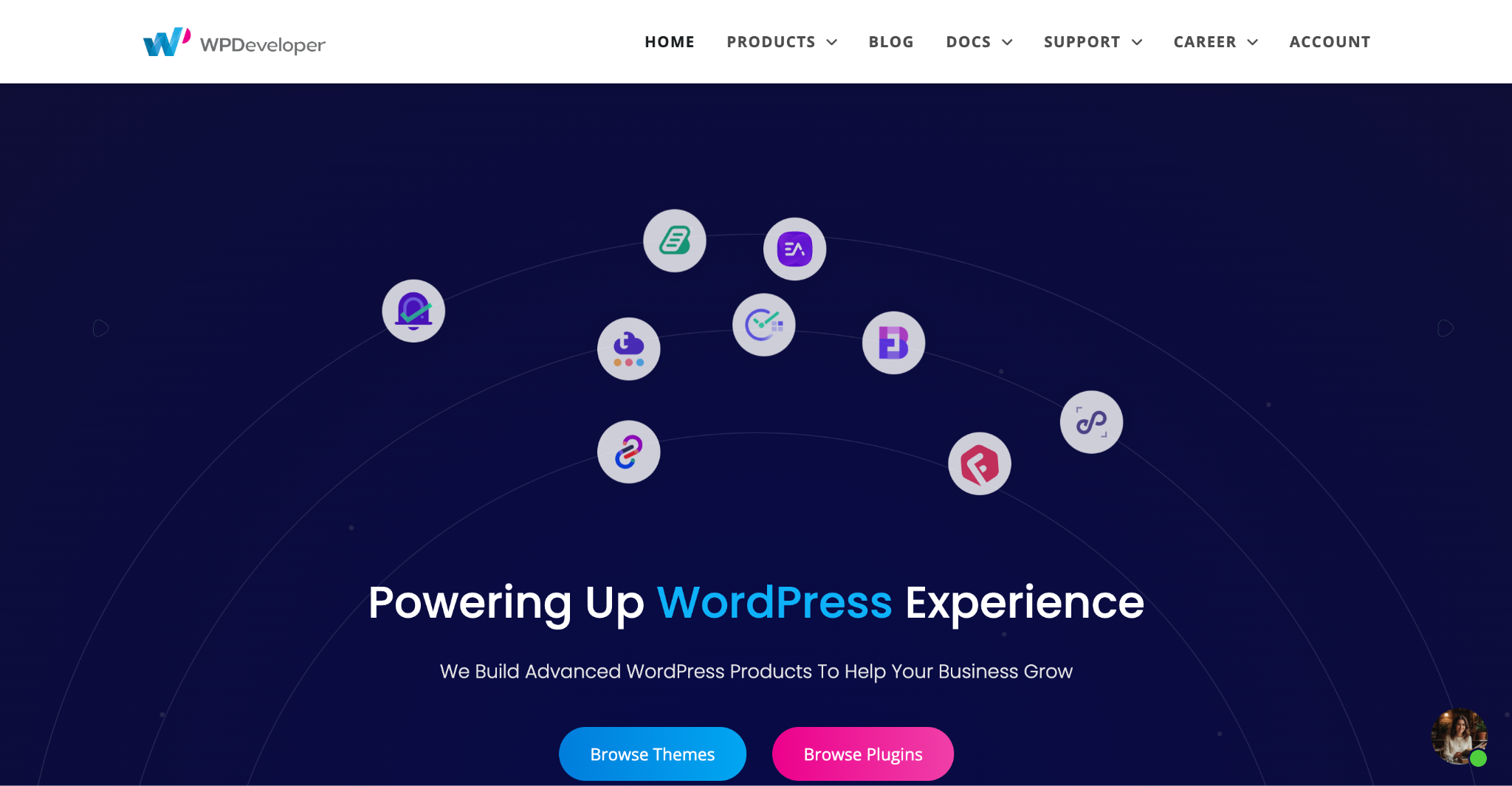
WPDeveloper, whose tools run on more than 6 million websites, is a clear example of this open-core playbook executed at scale. Its flagship product, Essential Addons for Elementor, is among the most widely used Elementor widget libraries in the world and its broader portfolio includes
- NotificationX (social-proof marketing)
- BetterDocs (knowledge base)
- Essential Blocks (Gutenberg blocks)
- EmbedPress (content embedding)
- ThinkRank (AI SEO Plugin)
Each of these plugins follows the same logic: give away genuinely useful functionality through the open WordPress repository to win adoption and trust, then monetize the depth that serious users are happy to pay for. It is open-source, distributed across an open-source ecosystem rather than from a single proprietary download.
Hosted/ Managed Cloud (SaaS on Top of OSS)
The managed cloud approach does not sell the software; it sells the experience of not having to run the software yourself.
This model works exceptionally well when the product is genuinely difficult to operate: databases, observability stacks, data pipelines and message queues. Self-hosting Kafka is a job. Using Confluent Cloud is not.
Grafana Labs is perhaps the clearest proof that this model can scale spectacularly without sacrificing open-source credibility. The core Grafana dashboard project remains fully open-source and it has 20 million users worldwide. Grafana Labs monetizes by offering Grafana Cloud: a managed, enterprise-grade version that bundles Grafana with Loki (logging), Mimir (metrics), Tempo (traces) and a growing AI layer. The company has stayed “true to our roots while diversifying our revenue sources,” as CEO Raj Dutt described it.
The same model plays out across the WordPress ecosystem, itself one of the largest open-source success stories in software. WordPress is completely free; the complexity of running it securely and at scale in production is not. That gap is exactly what xCloud fills in. xCloud is a next-generation managed hosting and server-management platform that lets users bring their own cloud provider: DigitalOcean, Vultr, Hetzner, AWS, Google Cloud, Linode, or any Ubuntu server, while it handles provisioning, SSL, caching, backups, staging, security hardening and site management from a single dashboard, with one-click deployment for WordPress, WooCommerce, Laravel, Node.js, n8n and more. It already powers 100,000+ businesses and brands worldwide.
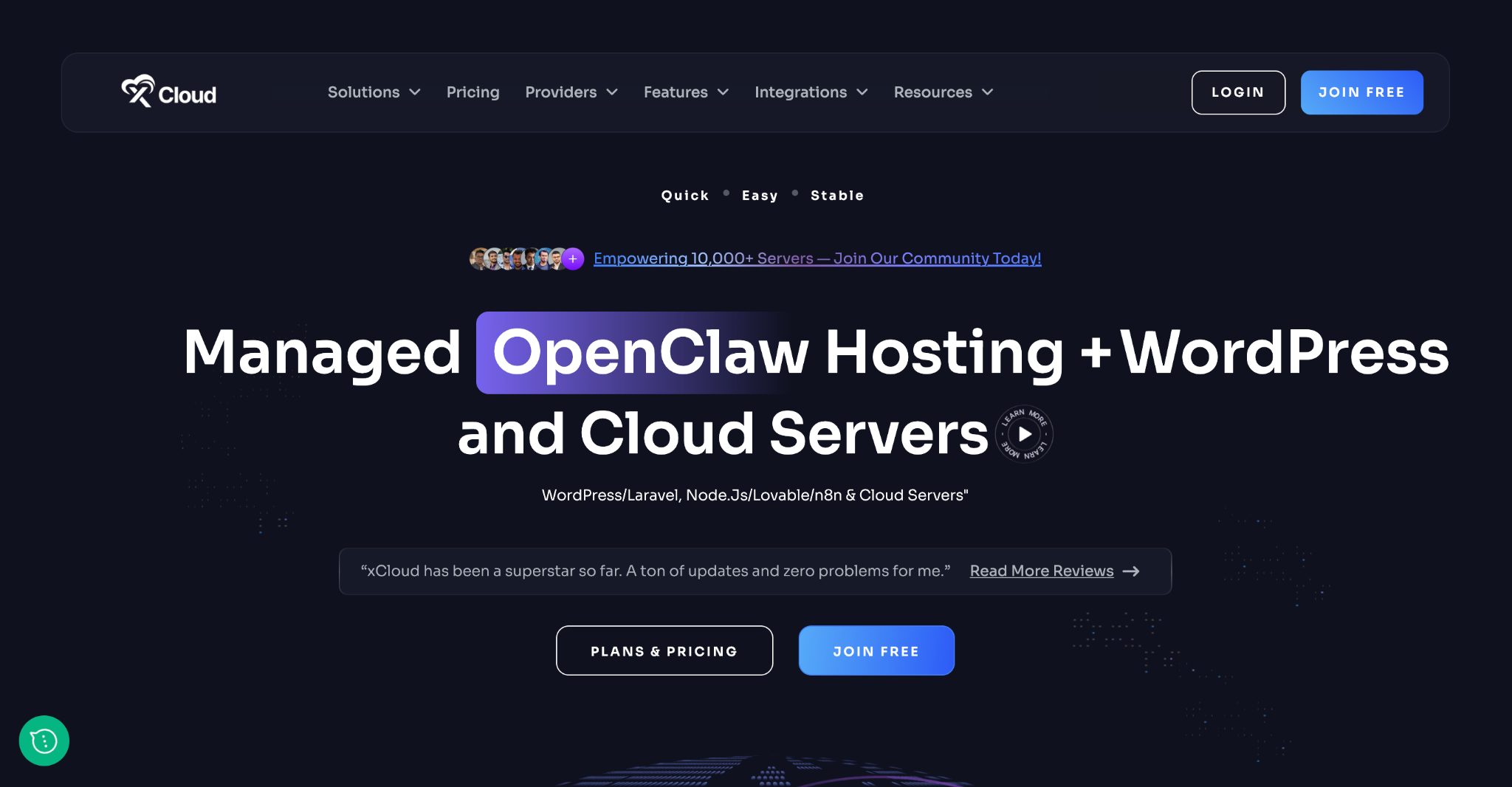
Crucially, xCloud is built around no vendor lock-in. Because users connect their own servers and retain full root access, the underlying infrastructure stays transparent and portable, the opposite of the closed, proprietary hosting stacks that trap customers. xCloud also runs a freemium structure of its own, with a free plan and a clearly published free-versus-pro feature split, making it a textbook combination of freemium adoption and managed-cloud monetization. (It even extends the model into the emerging open-source AI stack: xCloud offers one-click managed hosting for the open-source OpenClaw AI agent, applying the same “we run the hard part for you” principle to a brand-new category.)
The value proposition is a clean application of the managed-cloud principle: the open-source applications underneath remain free and portable; xCloud sells the time, reliability and expertise it takes to run them well.
Support, Services & Professional Editions
The oldest open-source business model is also still viable: sell expertise around the free software. This includes paid support contracts with SLAs, professional services and implementation consulting, training and certification and long-term support editions with extended maintenance guarantees. Red Hat built a multibillion-dollar business largely on this foundation. The limitation is that services revenue scales with headcount rather than software, so most mature companies blend it into a broader open-core or hosted offering rather than relying on it alone.
Why Donations And Sponsorships Mostly Don’t Work
Platforms like GitHub Sponsors and Open Collective have provided meaningful income to a small number of maintainers and initiatives like the Open Source Pledge (which encourages companies to pay OSS maintainers at least $2,000 per employed developer annually) are admirable steps forward.
But as a primary revenue model for a company? Donations don’t scale. The economics are brutal: the organizations consuming the most value from open-source code are typically the least likely to contribute financially. Large enterprises budget for SaaS subscriptions, not voluntary contributions. And without a clear value proposition for the payer, there’s no mechanism to grow donation revenue even as usage grows.
Comparison Table: Open-Source Businesses’ Revenue Models
| Model | Best Fit | Key Risk | Example |
| Open-core | Tools with a clear enterprise feature tier | Drawing the line wrong — too tight or too loose | GitLab, WPDeveloper |
| Managed cloud (SaaS) | Complex infrastructure products | Competing with hyperscalers at scale | Grafana Labs, xCloud |
| Support/services | Mission-critical, deeply customized deployments | Linear growth, not compounding | Red Hat/IBM |
| Dual licensing | Code used commercially AND in open-source projects | Community confusion, legal complexity | MySQL (Oracle) |
| Donations/sponsorships | Single maintainer or activist brand projects | Doesn’t scale; unpredictable | Curl, some FOSS utilities |
Community As a Growth Engine: Building More Than a User Base
The most durable competitive advantage in open-source software is not the code. It is the community. And the companies that understand this design their community strategy with the same intentionality they bring to their product roadmap.
The Community Flywheel
When a community is healthy, it does things no amount of marketing spend can replicate. Contributors reduce R&D costs while improving product quality. Active community members become product evangelists, recommending the tool, writing blog posts about it and answering questions. The developer community creates switching costs that no SLA can match: when your team has been trained in a tool, has written integrations for it and has a community they trust for support, moving away from it is painful in a way that has nothing to do with the product’s technical merits.
This is why open-source business growth and community investment are inseparable. You cannot manufacture the community flywheel retroactively. You have to build it from the beginning. The WordPress ecosystem is a living demonstration: the millions of free installs, reviews and support-forum threads that accumulate on WordPress.org are precisely the flywheel that lets a freemium plugin company reach global scale without a traditional sales engine.
Governance Structures Matter More Than Most Founders Think
One of the most underrated factors in open source business sustainability is governance, the formal or informal rules about who controls the project, how decisions get made and how commercial interests relate to community interests.
Foundation-backed projects, those under the Linux Foundation, the Cloud Native Computing Foundation, the Apache Software Foundation, or similar neutral bodies, signal to enterprises that the project will not be held hostage to any single commercial interest. This is increasingly important to enterprise buyers who have been burned by license changes and need confidence that the tools they’re standardizing on won’t become a legal liability overnight.
Company-controlled projects can move faster and be more strategically coherent, but they carry the implicit risk that business imperatives will eventually override community norms, as HashiCorp and Redis demonstrated.
Avoiding Contributor Burnout And Attrition
One of the subtler tensions in commercial open-source companies is the dynamic between paid employees and volunteer contributors. When a company employs engineers full-time to work on a project, those engineers necessarily shape the roadmap toward commercial priorities. Volunteer contributors, who may have very different interests, can feel sidelined, undervalued, or manipulated.
Retaining key contributors means building governance that gives community members real influence, not just the appearance of it. It means being transparent about commercial roadmap decisions early enough that they feel like conversations rather than announcements. And it means recognizing that the people maintaining your open-source project are not unpaid marketing resources; they are the reason your product exists.
Community-Led Growth As a Go-to-Market Strategy
The most efficient distribution model in developer tools is community-led growth: product-led adoption, amplified by an active community, scaled through organic developer advocacy. Discord communities, Slack workspaces, YouTube tutorials and conference talks all generate durable awareness in ways that paid acquisition cannot.
Measuring community health, though, requires looking beyond vanity metrics like GitHub stars. More meaningful indicators include: monthly active contributors (not just users), issue response time, time-to-merge for community PRs, forum and Discord engagement quality and the ratio of questions to answers in community channels.
License Wars: When And Why Companies Change the Rules
Nothing tests balancing growth and sustainability in open source more acutely than licensing. A license is the legal foundation of the community contract. Change it without warning and you do not just modify legal terms; you signal that the rules can change at any time, for any reason, by whoever holds the keys.
The License Spectrum
Open-source licenses exist on a spectrum from maximally permissive to maximally protective.
Permissive licenses (MIT, Apache 2.0) place almost no restrictions on use. Anyone can take the code, modify it, embed it in commercial products and sell it, no strings attached. These licenses maximize adoption because they remove every barrier to use. The trade-off is that they also allow competitors (including hyperscale cloud providers) to build commercially on top of the project without contributing back.
Copyleft licenses (GPL, AGPL) require that derivative works be distributed under the same license. The AGPL, in particular, extends this to software accessed over a network, meaning if you run AGPL-licensed code as a service, you must open-source your modifications. Many companies use AGPL specifically because it makes it difficult for cloud providers to offer a managed version without a commercial agreement. Notably, the entire WordPress plugin economy runs on the GPL, which is precisely why a free plugin and its commercial Pro upgrade can coexist legally and transparently.
Source-available licenses (Business Source License, Server Side Public License) allow anyone to view and use the code but restrict commercial deployment in specific ways. These are not open-source licenses by the OSI definition, but they’ve become the default escape valve for companies that feel their open-source license is being exploited.
Can You Change Licenses Without Killing Your Project?
The consistent lesson from these cases is not that license changes are always fatal, but that they are only survivable when done with extraordinary care and genuine community consultation.
A few practical considerations for any company contemplating this:
The CLA requirement. To relicense a project, you typically need Contributor License Agreements from every contributor whose code remains in the codebase. Many projects have failed to maintain this infrastructure, making relicensing legally impossible without forking themselves.
The fork risk is permanent. Once a community forks a project, the original vendor no longer controls the brand narrative. OpenTofu and Valkey both had the Linux Foundation’s backing and the full technical capacity of their original maintainers within weeks. The moat that a project builds over the years can be reproduced faster than anyone expects, especially when the community is energized by the feeling of having been betrayed.
The Cloud Giants Problem: Competing With Your Own Customers
Perhaps the most structurally difficult challenge in open-source business sustainability is the hyperscaler dynamic. AWS, Google Cloud and Microsoft Azure do not just use open-source software; they package it, sell managed versions of it and in doing so, capture much of the commercial value that the original creators need to sustain development.
How Hyperscalers Undercut Open-Source Companies
The dynamic is straightforward: a company builds and open-sources a product (a database, a data pipeline, an orchestration tool). The product gains adoption. A cloud provider adds a managed version to their platform, acquiring customers who might otherwise have paid the original vendor for cloud hosting. The original company gets none of that revenue, while continuing to bear the bulk of the maintenance burden.
The Elastic vs. Amazon Elasticsearch conflict is the most documented example. Amazon Web Services launched “Amazon Elasticsearch Service” as a managed offering built directly on the Elastic open-source codebase. Elastic, which had its own cloud product, argued this was commercially exploitative, particularly since Amazon’s offering was often the first result developers encountered when searching for “managed Elasticsearch.“
This dispute directly led Elastic to relicense under the SSPL in 2021, a decision that generated significant controversy but also led, eventually, to Elastic re-adopting an open-source license in 2024 after the market dynamics shifted.
It is worth noting that this hyperscaler dynamic is most acute for commodity infrastructure primitives. Platforms like xCloud sidestep a meaningful part of it precisely by being cloud-agnostic; they sit above the hyperscalers, letting customers run open-source applications on AWS, Google Cloud, or any provider they choose, rather than competing head-to-head to host a single open-source database.
Strategic Responses
- Moving to SSPL or other protective licenses. As discussed above, this is the most common response and carries real risk.
- Out-innovating the cloud tier. The most sustainable response is building features fast enough that the hyperscaler’s version always lags. This requires product velocity that is genuinely difficult to sustain, but companies like Grafana Labs have made it work by focusing on innovation that the cloud providers can’t easily replicate.
- Going multi-cloud / cloud-agnostic. Positioning the product as the best way to manage infrastructure across multiple clouds, rather than within any single cloud, creates a value proposition that cloud providers can not match by definition.
- Co-sell agreements. Partnering with cloud providers through their marketplace programs, where the original vendor gets a share of managed service revenue, is increasingly common. Microsoft reached a commercial agreement with Redis Ltd.; several AWS Partners have similar arrangements.
Is the Cloud Provider Threat Overblown?
The honest answer is: it depends on the category. For some types of infrastructure software, being on AWS’s marketplace actually accelerates adoption and creates a path to the vendor’s own enterprise product. Many developers who discover a tool through AWS end up buying the original vendor’s premium tier for the support, the integrations and the trust of dealing with the creator.
Case Studies: Companies Getting the Balance Right (And Wrong)
GitLab: The Open-Core Archetype
GitLab is the clearest example of open-core done right at scale. Founded in 2011 as a fully open-source GitHub alternative, the company built a community of thousands of contributors before introducing paid enterprise tiers.
What made it work:
- A transparent, community-visible roadmap. GitLab publishes its product direction publicly, allowing community members to engage with and influence it.
- A famously radical public handbook. GitLab’s company handbook, thousands of pages covering everything from engineering processes to compensation philosophy, is entirely public. This radical transparency builds trust with developers in a way that conventional corporate communications cannot.
- A clearly articulated feature line. GitLab has consistently communicated why certain features are in the enterprise tier (they require infrastructure GitLab hosts, or they’re primarily relevant to security/compliance buyers) rather than appearing to gate things arbitrarily.
The results speak for themselves:
- $579.9 million in total revenue for FY2024
- 30,000+ paying customers
- More than 50% of the Fortune 100 are using the platform.
GitLab converted the free-to-enterprise funnel at scale by designing the conversion path into the product from the start.
The WordPress Ecosystem — Open-Core As a Mass Market
Where GitLab proves open-core works at enterprise scale, the WordPress plugin economy proves it works as a mass market. Hundreds of independent companies build sustainable businesses on a shared open-source foundation, each carving out a niche, page builders, SEO, security, forms, social proof, documentation and monetizing Pro upgrades.
WPDeveloper is a representative success story here: an open-core plugin company that grew to 6 million-plus active sites on the strength of free, GPL-licensed tools distributed through WordPress.org, then converted that adoption into a durable commercial business through Pro plans and bundles. It is the open-core model, the community flywheel and product-led growth operating in concert, exactly the integrated philosophy that the rest of this article argues is the key to lasting open source business success.
What Sustainable Open-Source Growth Actually Looks Like in 2026 And Beyond
The big question is what sustainable open-source growth will actually look like in the years ahead. Let us break it down more in this section.
Emerging Trends Reshaping the Equation
AI is rewriting open-source economics. More than 50% of new open-source projects in public repositories in 2025 focus on AI/ML frameworks, cloud-native infrastructure and developer tooling.
A new generation of platforms is racing to make these open-source AI tools easy to deploy. xCloud’s managed hosting for the OpenClaw AI agent is one early example of the “managed cloud for open-source AI” pattern taking shape.
The “open weights” vs. “open source” debate in AI adds another layer of complexity: models released with public weights but restricted usage terms (common among large AI labs) blur the definition of open source in ways the traditional OSS community is still working through.
Infrastructure tooling is consolidating. A small number of dominant open-source projects are capturing an increasingly large share of developer mindshare in key categories — Kubernetes, Postgres, Kafka, Terraform/OpenTofu, Prometheus/Grafana. This consolidation creates enormous opportunities for the commercial entities behind them, but also raises the stakes of governance and sustainability decisions.
76% of enterprises plan to increase their use of open-source software in 2025, according to Linux Foundation data. Simultaneously, the Linux Foundation’s 2025 State of Open Source report found that most enterprises “systematically underinvest in the security practices, formal governance structures, community engagement and comprehensive strategies that production environments demand.” The gap between consumption and investment remains enormous.
Principles That Separate Sustainable Projects
After reviewing dozens of open-source companies, their models, their failures and their successes, a few principles consistently distinguish the ones that achieve business growth and sustainability from those that do not:
- Design the business model before you need it. The worst time to figure out how to monetize an open-source project is when you are running out of runway. The feature tier line, the governance structure and the CLA infrastructure all need to be in place before they become urgent.
- Be transparent about money early. Developers are sophisticated about the economics of open-source projects. They understand that companies need revenue. What they do not forgive is hypocrisy: claiming community values while secretly planning to extract value from the community. Companies like GitLab and Grafana Labs are explicit about their commercial models and that transparency is part of why their communities trust them.
- Diversify revenue streams. No single revenue source should be so dominant that the loss of it forces a license change or a pivot that alienates the community. Cloud + enterprise + professional services + marketplace revenue give you optionality.
- Govern for the long term. The governance structure you choose signals what you believe the project is for. A project governed by a neutral foundation signals that it exists for the community. A project governed entirely by a single company signals that it exists for that company’s commercial interests and the community will eventually act accordingly.
Open Questions the Industry Has Not Resolved
Several structural tensions in open-source business remain genuinely unresolved:
- Can AI-generated code change the contribution model? If AI tools can generate high-quality pull requests, the traditional argument that community contributions reduce R&D costs becomes more complicated. The human contribution, judgment, domain expertise and long-term stewardship may become more valuable, not less.
- Will regulators step in on cloud provider dynamics? The hyperscaler exploitation of open-source software has attracted attention from policymakers in the EU and elsewhere. Whether regulatory pressure changes the economics of the cloud/OSS relationship is an open question with significant implications.
- Is “open source” losing meaning? The proliferation of source-available licenses, “open weights” AI models and hybrid licensing schemes means that the word “open source” now covers an enormous range of arrangements. The OSI (Open Source Initiative) definition remains rigorous, but the marketing use of the term has outpaced it considerably.
The New Social Contract of Open Source
The question that runs through every story in this post is the same: Who is open source for?
For developers, it is for building without barriers. For companies, it is for distribution, trust and community leverage. For the ecosystem, it is a shared resource that creates trillions of dollars of value that no single entity owns.
The most successful open source businesses are the ones that hold all three of those answers simultaneously, not as competing interests, but as a coherent, integrated philosophy. GitLab did not become a $5 billion public company by treating its community as a free marketing channel. Grafana Labs didn’t build $400 million in ARR by restricting what developers could do with its dashboard tool. They built with their communities, not on top of them.
You can see the same philosophy across the Startise portfolio, which lives at the intersection of open source and commerce. WPDeveloper builds an open-core business on top of the open-source WordPress project, giving away GPL plugins to millions of sites and monetizing depth through Pro plans. xCloud applies the managed-cloud model to open-source applications, selling reliability and time savings while keeping the underlying infrastructure portable and free of lock-in.
Storeware shows that the same freemium playbook: free tier for adoption, paid tier for value capture, even travels into proprietary platform ecosystems: its Shopify apps (StoreSEO, StoreFAQ, TrustSync, EasyFlow and more) are not open source, because Shopify itself is closed, but they prove that the monetization discipline learned in open source is a transferable skill, not a quirk of licensing. The contrast between the open WordPress world and the closed Shopify world, sitting side by side in one portfolio, is a useful reminder that how you balance growth and sustainability matters more than whether your foundation happens to be open.
Balancing growth and sustainability in open source is not a zero-sum problem. It’s a design problem. Build the revenue model deliberately, govern for the long term, treat your community as a partner rather than an asset and be honest about the commercial reality from the beginning.
The social contract of open source is being renegotiated. The companies that will thrive in the next decade are the ones building that contract into their DNA — not scrambling to rewrite it when the balance sheet demands it.
Frequently Asked Questions (FAQ)
What is an open-source business model?
How do open-source companies make money?
What is the difference between open-core and open source?
Why do open-source companies change their licenses?
What is the Business Source License (BSL)?
For more analysis on how modern software businesses build, grow and sustain themselves, subscribe to the Startise blog.