





















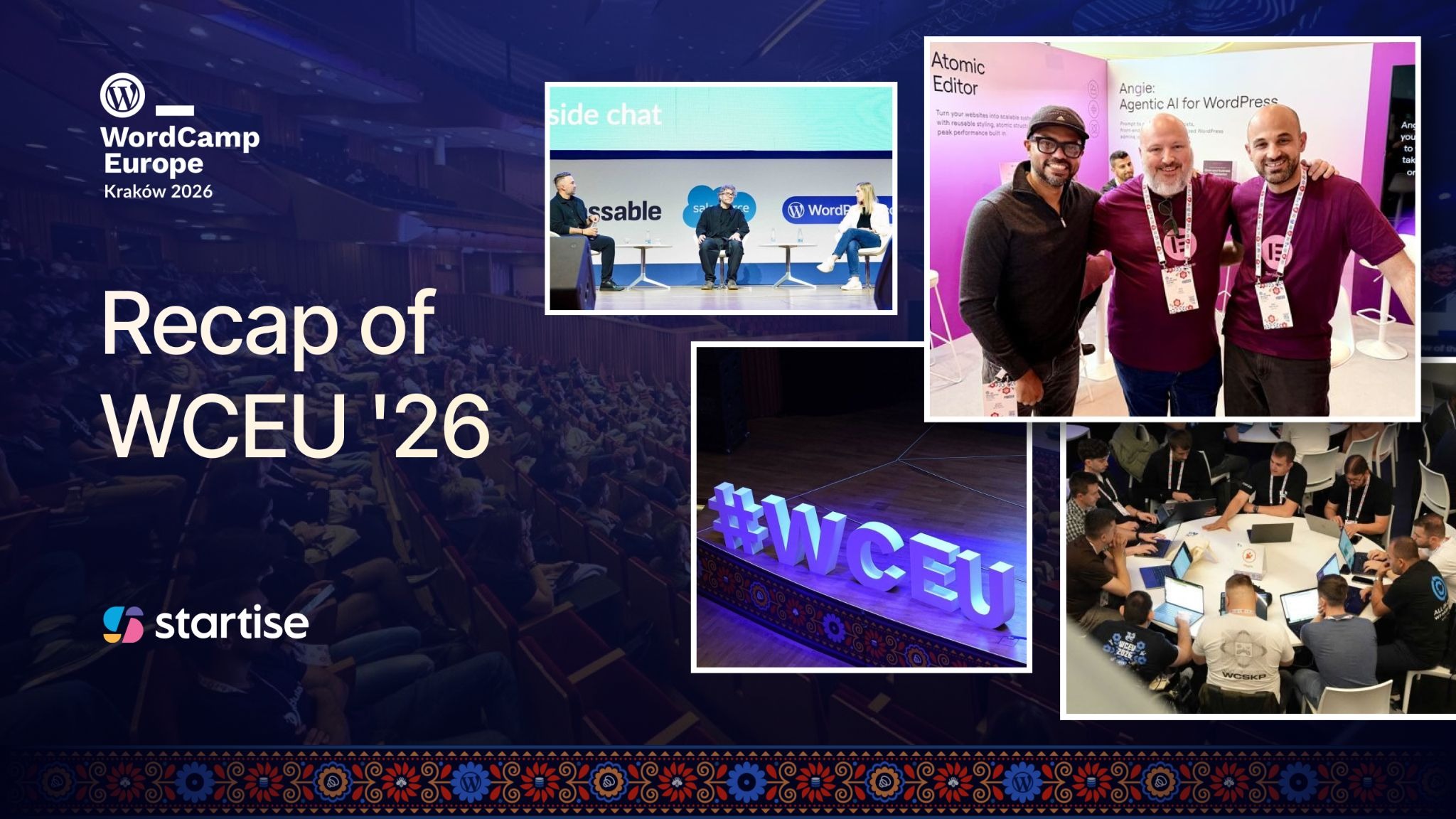
WordCamp Europe 2026 once again proved why it sits at the heart of the WordPress world.
Held at the ICE Kraków Congress Centre from June 4 to 6, the event drew 2,458 attendees from 81 countries, a 43 percent jump over the previous edition, with close to a quarter of the room attending their first WordCamp Europe!
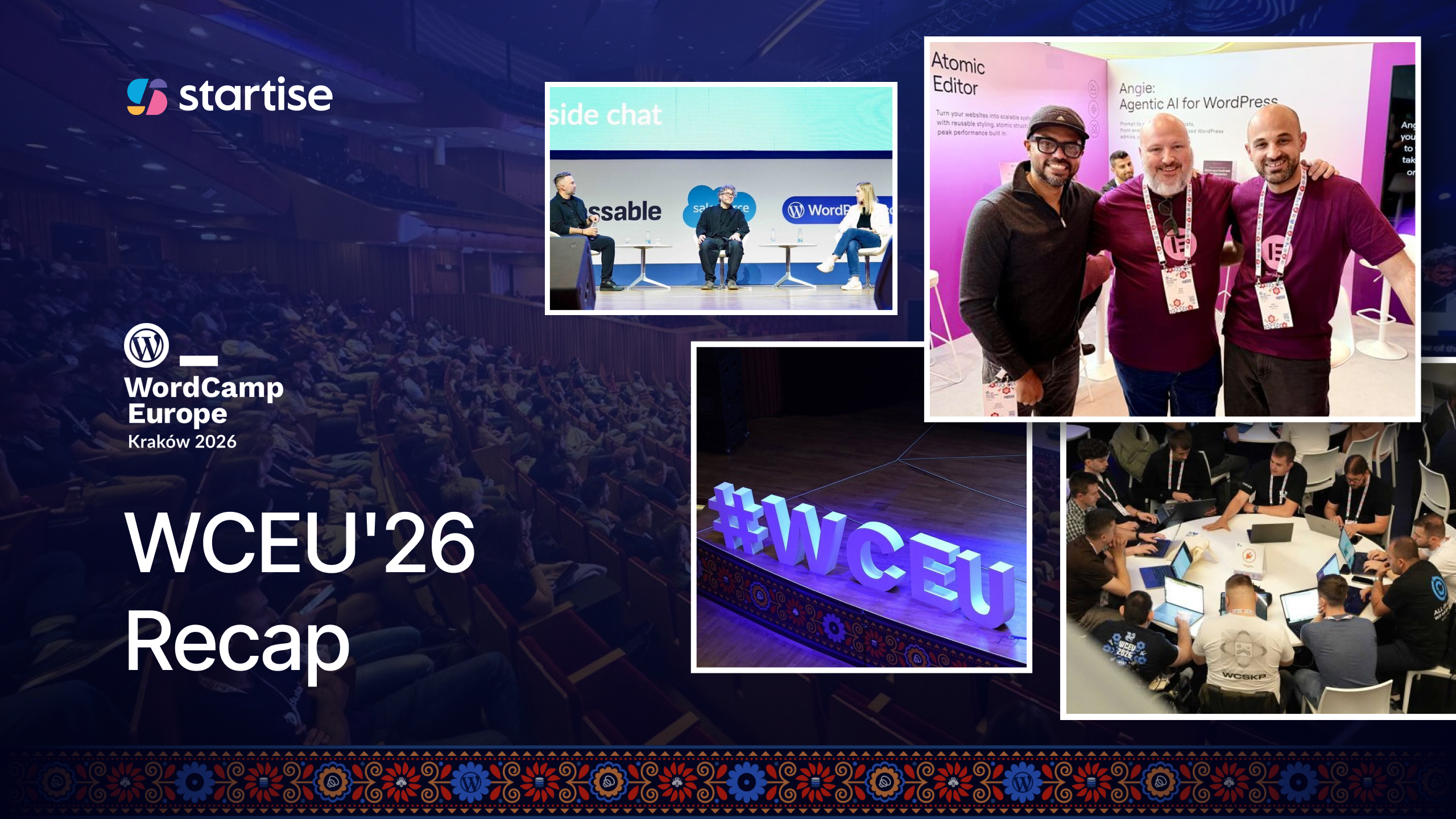
But numbers only tell part of the story.
What stood out this year was not just the scale; it was the direction. Across keynotes or speaker sessions, hallways and late conversations in the Kraków sun, one thing became clear: WordPress is no longer talking about a content management system as a content management system. It is talking about intelligence, the open web and the people who keep both moving forward.
For teams WPDeveloper and xCloud, being at WordCamp Europe 2026 was not about observing from a distance; it was about being inside the conversations. We came to meet partners, reconnect with friends we see once a year and get a clearer read on where the ecosystem is actually heading. Our founder, M Asif Rahman, co-founder, Nazmul Hasan Rupok, and partner, Md. Shahjahan attended all three days of WCEU 2026.
🧭 How WordCamp Europe 2026 Was Structured
The event followed the shape it has grown into over the years, and that shape works.
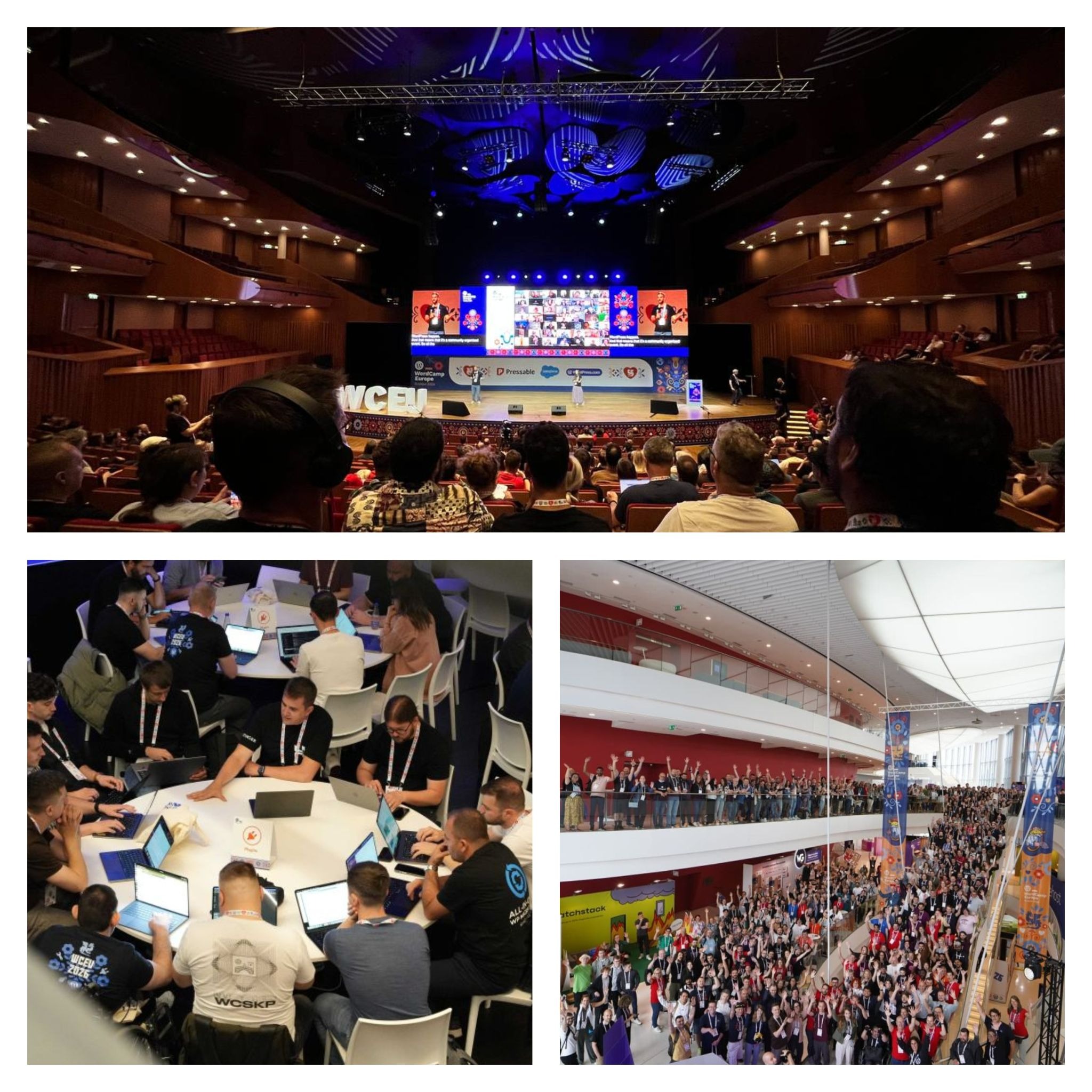
🤝 Contributor Day (June 4) opened the week. Instead of watching presentations, hundreds of people sat down at more than twenty-five tables to improve WordPress itself, from Polyglots translations and Documentation to Core, Performance, Testing and the Plugins team. Newcomers were paired with named table leads and mentors, and anyone who could not travel could join remotely through the Make WordPress Slack.
🎤 Conference Days (June 5 to 6) carried 49 talks and eight hands-on workshops across multiple tracks, grouped into themes that ran from core development and AI to business and the open web.
From our perspective, that structure created continuity. Conversations that started on Contributor Day carried into the talks, and the talks carried into the hallways. It felt built for depth rather than variety.
📊 WordCamp Europe 2026 In Numbers
A few figures that stood out:
- 2,458 attendees
- 81 countries represented
- Close to 1 in every 4 are attending their first WordCamp Europe
- A 43 percent increase over the 2025 edition
- 49 talks and 8 hands-on workshops
- 25+ Contributor Day tables with close to 200 contributors
- An after-party the local team stretched to eight hours
But the most important number is not on this list. It is the number of follow-up conversations that will keep going long after Kraków. That is where WordCamp really creates value.
🌍 The Big Theme: Building With AI Without Losing the Human Touch
The conversation was no longer about whether AI belongs in WordPress. With WordPress 7.0 moving AI into the core, that question is settled.
The new question was sharper and more practical:
How do we build with AI without losing the human part?
That framing showed up everywhere. In a talk titled “Human in the loop means something,” Tammie Lister argued that the phrase is a real commitment rather than a checkbox and that the products worth building let people and AI each do what they do best. The same idea carried into the closing fireside chat, where Mary Hubbard, the executive director of WordPress, made the case that the open-source values that built WordPress should also shape how the community approaches AI. As she put it, the community should be much louder about it.
That shift alone tells you where the ecosystem is right now.
⭐ A New Layer Added: AI Moves Into the Core Of WordPress
The headline of the week was WordPress 7.0 “Armstrong” taking the main stage, with Matías Ventura, lead of the Gutenberg project, as its release lead. He asked every contributor in the room to stand for a round of applause, and the moment captured how much this release means.
What gives WordPress 7.0 its weight is the work that moved into core:
🤖 A native AI Client built into WordPress itself
🧩 A new Abilities API that lets plugins declare what they can do in a way other tools can discover
🔌 A Connectors screen for wiring up providers such as OpenAI, Anthropic and Google Gemini straight from the admin
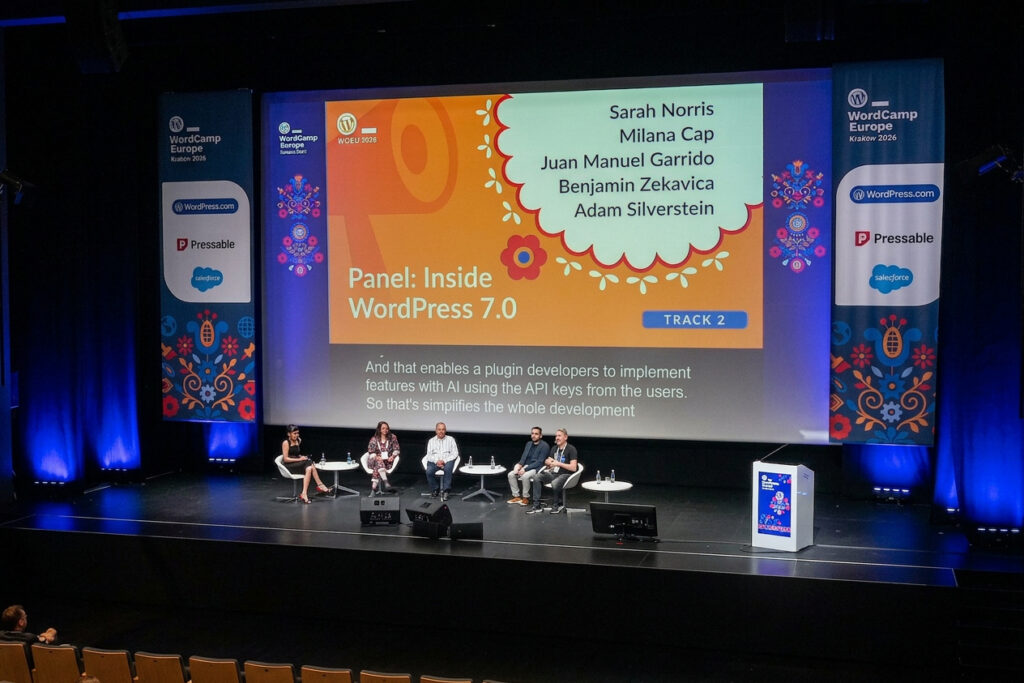
Around the release, AI earned its own dedicated presence on the schedule, growing from a side topic into one of the busiest themes of the event. The “Inside WordPress 7.0” panel brought together contributors who shipped the release, including Juan Manuel Garrido, Adam Silverstein, Benjamin Zekavica, Sarah Norris and Milana Cap, and framed it as a story about people and coordination rather than a feature list. Anukasha Singh showed how the Abilities API can make plugin permissions cleaner and safer than the capability checks developers have leaned on for years.
For us, building both WPDeveloper’s WordPress products and the xCloud platform, this direction is a strong signal. As AI moves into the core of the software our users run, both the products on top and the infrastructure beneath have to keep pace.
🔬 The Moment Everyone Will Remember: CERN Goes Live On WordPress
It was fitting that the opening keynote came from CERN, the laboratory outside Geneva where the World Wide Web was invented more than thirty years ago. Joachim Valdemar Yde, who manages CERN’s web team, came to explain why the birthplace of the web had chosen WordPress to carry its presence forward, and then he delivered the line the room had been waiting for.
Francisco Borges Aurindo Barros, who leads CERN’s WordPress infrastructure, walked through how they built it. A self-service portal lets anyone at CERN request a site in a few clicks, a shared distribution supplies a common theme and a set of security-hardened plugins, and an in-house tool provisions each new site on Kubernetes in about a minute. In its first year, the platform has already set up hundreds of sites, and the team plans to open-source the migration tool that rebuilt years of content as blocks with no downtime.
There is a neat symmetry to it. The institution that published the world’s first website now runs on the software that powers more than 40 percent of today’s web, maintained by the people in the room.
🌟 What WordCamp Europe Feels Like When You Are Actually There
There are tech conferences, and then there is WordCamp Europe. The difference becomes obvious once you are on the ground.
During our time in Kraków, one pattern repeated itself: the most important conversations were not happening on stage. They were happening everywhere else.
Hallways. Coffee breaks. The sponsor area. The eight-hour after-party. Random encounters between sessions.
This is where context is built. Familiar faces meant conversations did not start from zero. There was already history, trust and shared understanding, and in this community, the speed of a conversation often depends on the depth of the relationship.
⛳ The Real Trends We Saw Emerging
Beyond the structure, a few clear themes ran through the sessions and the conversations around them.
1. AI Moved From Feature To Foundation
AI is no longer something you bolt onto WordPress. With the AI Client and Abilities API in core, it is becoming part of the platform itself. The shift is the same one the wider hosting world is making: software is being rebuilt around AI rather than having AI added to it. It is a direction we are already moving in, toward smarter, self-adjusting infrastructure rather than static server setups.
2. The Open Web Now Has To Be Ready For AI Readers
In one of the sharper sessions, Alain Schlesser pointed out that AI assistants and search now send real traffic to the open web, with more than a billion referral visits logged by the middle of 2025. The takeaway was practical: WordPress sites need to be ready to be found, read and cited by AI, not only by people.
3. Performance Is Being Proven On the Smallest Servers
Some of the most popular sessions were about doing more with less. One talk profiled how far a WordPress site can run on a twelve-dollar virtual server, tuning away bottlenecks live in front of the room. Peter Wilson showed how the WP_Query class has been made faster through better caching. This is the same story we tell customers every day: a small, well-tuned server can carry far more than people expect.
4. Security Is Becoming a Shared, Real-Time Discipline
David Snead, an attorney who works with infrastructure providers, framed abuse prevention as a team effort, with hosts, registrars and registries coordinating through shared, real-time intelligence. The logic is simple: a threat to one WordPress host is a threat to all of them. Security is moving from static filtering toward anticipation.
5. Open Source Sustainability Is Turning Into a Standing Habit
Sustainability at WordCamp is about the people who keep the project alive. Marcel Bootsman shared a practical playbook for supporting open source without burning out the maintainers, and Karin Christen described how her agency turned Five for the Future from a good intention into a standing team habit through internal contributor days.
🔥 What Actually Mattered To Us At WordCamp Europe 2026
For us, WordCamp was not about visibility. It was about alignment.
The team behind WPDeveloper and xCloud spent the event in conversations with infrastructure partners, SaaS founders, hosting operators and long-term peers. Our founder M Asif Rahman, who built both WPDeveloper and xCloud, came with two stories to tell: how AI has changed the way we build and run the business, and how fast what we are building is growing. He talked about both, at length.
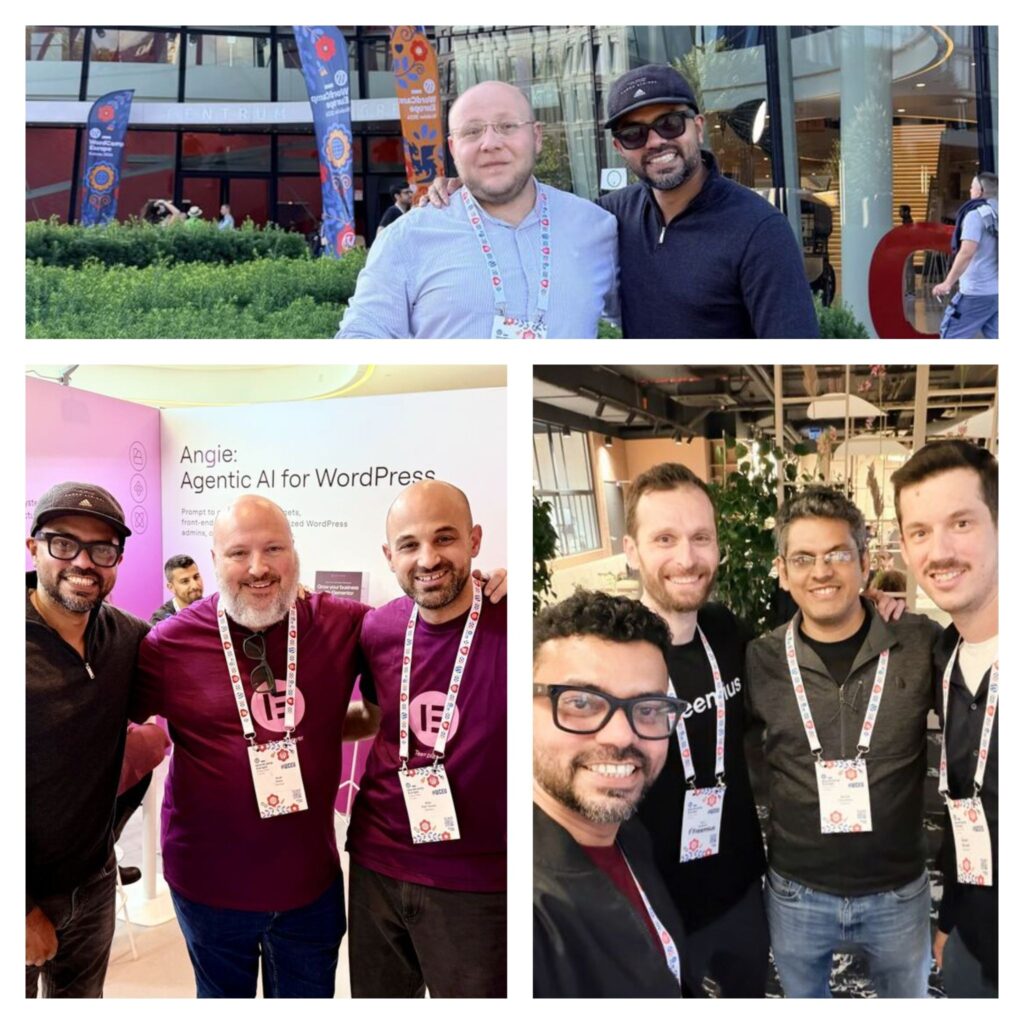
But the conversations that mattered most went deeper than a pitch. The Freemius and Elementor teams showed us what they are building with agentic AI, the kind of exchange that only happens when the people doing the work are in the same room. Some conversations confirmed direction. Others challenged assumptions. A few opened doors to collaboration that will unfold over time.
It is worth remembering how wide the work now reaches. WPDeveloper has spent years building for the WordPress community, and xCloud carries that further into infrastructure, running WordPress, Laravel, PHP and Node.js workloads, along with agentic stacks, on Vultr, AWS, Hetzner, Google Cloud and any Ubuntu-based cloud. A week like this is how we keep all of it pointed at where the ecosystem is actually going.
Spending three days inside this community makes one thing obvious: WordCamp Europe is not a disconnected yearly event. It is a continuation of an ongoing story.
Most of the relationships here are long-term. Many have grown over years of collaboration, friendly competition and showing up in the same rooms. That history changes the tone completely. There is less explaining to do, more honesty in the conversations and far faster alignment.
✨ Closing WordCamp Europe 2026 With Gratitude. See You In Málaga
WordCamp Europe 2026 reinforced something simple but important. WordPress is evolving fast, with AI moving into its core and the open web reaching further than ever, and it is still fundamentally human-driven. Technology sets the direction, but relationships accelerate it.
For us, being present was not about watching trends from the outside. It was about taking part in where those trends are being shaped.
Thank you to the organizers, the volunteers and the local team who made three days in Kraków run so smoothly, and to everyone who stopped by to say hello, share an idea or simply put a face to a name.
The calendar already has the next stops. WordCamp US 2026 runs in Phoenix from August 16 to 19, and WordCamp Europe returns to Málaga, Spain, from May 27 to 29, 2027. We will be there.
See you in Málaga. 👋
Subscribe to our blog for tutorials, guides and practical tips on WordPress, web hosting and server management. You can also join our community to share insights and trade notes with other builders.